You can still enjoy Thanksgiving favorites while living with diabetes
Parkland Health experts share tips for managing blood sugar at the holiday meal
Thanksgiving is a time to gather with family and friends and share a meal filled with delicious food and irresistible desserts. However, for someone living with diabetes, overloading their plates with foods high in carbohydrates and sugar can lead to blood sugar spikes.
Ahead of the holiday, Parkland Health experts are sharing tips to help people with diabetes enjoy traditional Thanksgiving favorites while making mindful food choices and maintaining healthy habits.
“People with diabetes don’t have to avoid traditional Thanksgiving foods or feel like they can’t enjoy the meal with their families,” said Melissa Mendez, MS, RD, CSOWM, LD, a Registered Dietitian at Parkland. “The key is to prioritize lean protein and non-starchy vegetables while enjoying smaller portions of carbohydrate-rich dishes.”
Mendez says planning your meal is about balance. She recommends the following plate breakdown:
- ¼ of the plate: Lean protein, such as turkey breast.
- ½ of the plate: Non-starchy vegetables, such as Brussels sprouts, green beans and carrots.
- ¼ of the plate: Smaller portions of carbohydrate-rich favorites, such as stuffing, mashed potatoes or sweet potato casserole.
Many traditional Thanksgiving dishes can affect blood sugar. Foods such as macaroni and cheese, mashed potatoes, stuffing and sweet potato casserole are high in carbohydrates. Desserts such as pie and cranberry sauce can also contribute to elevated blood sugar levels.
Mendez recommends limiting each starchy side dish to about half a cup and cranberry sauce to two tablespoons.
“These meals are usually not the type of foods that an individual eats very often, and what makes them so delicious is usually large quantities of carbohydrates and fat, which for someone with diabetes could cause blood sugars to go up and stay up,” said Uma Gunasekaran, MD, endocrinologist and Executive Medical Director of the Global Diabetes Program at Parkland and Associate Professor of Internal Medicine at UT Southwestern Medical Center. “I encourage my patients to enjoy the meal but be careful about portion sizes. I suggest sampling higher-carbohydrate foods and decreasing intake of salty foods.”
Mendez says making small changes to traditional Thanksgiving recipes can also make a difference without sacrificing flavor. She suggests adding carrots, mushrooms, kale or broccoli to stuffing and incorporating vegetables such as cauliflower, broccoli, carrots or zucchini into macaroni and cheese. Other simple adjustments include cutting the amount of sugar in cranberry sauce recipes by half, skipping the marshmallow topping on sweet potato casserole and avoiding gravy on mashed potatoes.
For a more colorful side dish, Mendez recommends a holiday salad made with kale, almonds, dried cranberries, sweet potatoes, red onion and pomegranate.
With a large Thanksgiving meal ahead, some people may be tempted to skip earlier meals to save room for dinner. However, Mendez says maintaining a consistent eating schedule is an important part of managing blood sugar levels.
“Don't skip breakfast or lunch to save room for Thanksgiving dinner,” she said. “Maintaining your regular meal schedule helps prevent low blood sugar and keeps you from becoming overly hungry and overeating later in the day.”
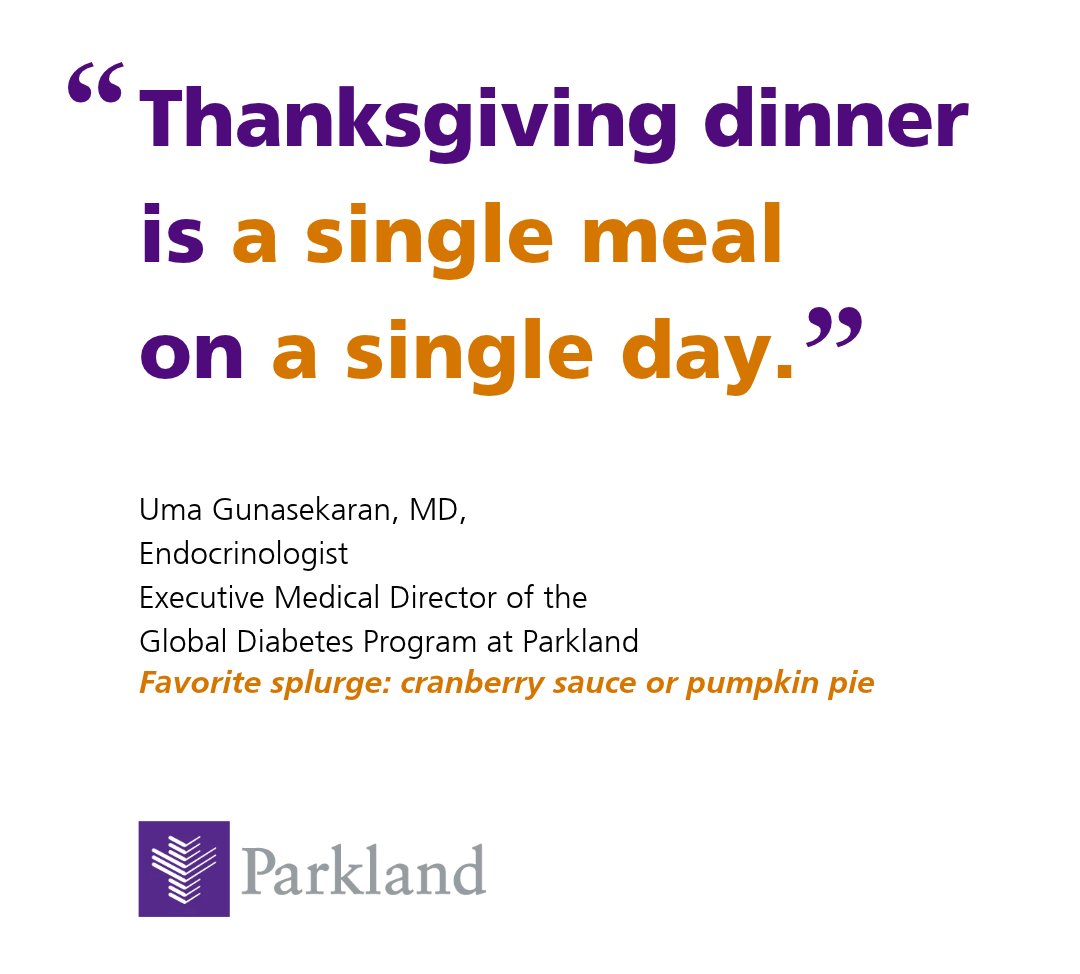
Dr. Gunasekaran reminds people that Thanksgiving is one day and is not an excuse to abandon healthy habits for the rest of the week. While enjoying holiday favorites, she says being mindful of portion sizes and what happens after the meal can help people stay on track.
“Thanksgiving dinner is a single meal on a single day,” said Dr. Gunasekaran. “We want people to enjoy their meal, pack up those leftovers and send them home with friends and family. Once the meal is over, it's time to focus on enjoying time with loved ones.”
Mendez also encourages people with diabetes to focus on the experience of celebrating with family and friends. She recommends choosing water over sugary drinks, limiting alcohol to one or two drinks and finding opportunities to stay active, such as taking a family walk or participating in a Thanksgiving morning 5K.
“You don’t have to skip the celebrations or stay home,” Mendez said. “Attend the event but focus on family. Enjoy your holiday celebrating with your family and friends.”
For information about Parkland’s diabetes services, resources and education, visit www.parklanddiabetes.com.
For information about services available at Parkland, visit www.parklandhealth.org.
Back